Water and Wastewater Treatment
sm
www.WaterAndWastewaterTreatment.com
What is Water and Wastewater Treatment?
Water
and wastewater treatment is the process of safely removing harmful contaminants
(bacteria, viruses, pathogens, chemicals, etc) from sewage and industrial water
and rendering the processed/treated water safe to return to the
environment.
_______________________________________________________
Clean
Power Generation Solutions
Our "Integrated" CHP
Systems (Cogeneration
and Trigeneration)
Plants
Have Very High Efficiencies, Low Fuel Costs & Low Emissions
The CHP System
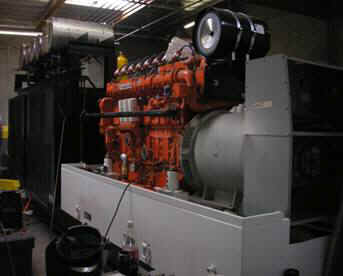
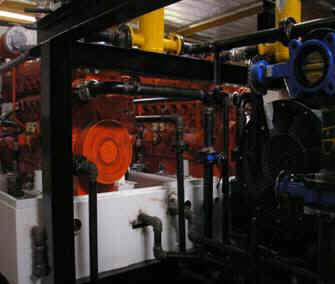
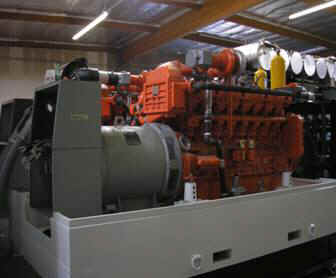
below is Rated at 900 kW and Features:
(2) Natural Gas Engines @ 450 kW each on one Skid with Optional
Selective Catalytic Reduction system that removes Nitrogen
Oxides to "non-detect."
The Effective Heat Rate of the CHP System below is
4100 btu/kW with a Net System Efficiency of 92%.
Our CHP Systems
may be the best solution for your company's economic and environmental
sustainability as we "upgrade" natural gas to clean power with our clean
power generation solutions.
Our Emissions
Abatement solutions reduce Nitrogen
Oxides to "non-detect" which means our
CHP Systems
can be installed and
operated in most EPA non-attainment regions!
_______________________________________________________
Our CHP Systems
- (operating in either natural gas fueled cogeneration
or trigeneration
--- or --- solar
cogeneration or solar
trigeneration configuration) may be the optimum power and energy solution for
customers wanting increased power reliability and decreased energy and
environmental costs. A few of the
clients and markets that may benefit from our CHP
Systems include the following:
-
Airports
-
Casinos
-
Central
Plants
-
Colleges
& Universities
-
Dairies
-
Data Centers
-
District Heating & Cooling plants
-
Food Processing Plants
-
Golf/Country
Clubs
-
Government
Buildings and Facilities
-
Grocery Stores
-
Hospitals
-
Hotels
-
Manufacturing
Plants
-
Military
Bases
-
Nursing Homes
-
Office
Buildings / Campuses
-
Radio Stations
-
Refrigerated
Warehouses
-
Resorts
-
Restaurants
-
Schools
-
Server
Farms
-
Shopping
centers
-
Supermarkets
-
Television
Stations
-
Theatres
For
qualified clients we will design, build, finance, own, operate and
maintain a new:
Clean
Power Generation
Cogeneration
Organic
Rankine Cycle
Trigeneration
Waste
Heat Recovery
energy
system, through a Power
Purchase Agreement that guarantees
a minimum 10% reduction in our client's energy expenses.
(NOTE: Our
engineering
and EPC services may be provided by one of our affiliated
companies - one of which is a Top ENR ranked EPC company.
To receive a preliminary no-obligation review of your energy, engineering or
project plans,
send an introductory email to us at the following email address:
info@CHPsystems.com
About
us:
We
provide engineering and renewable energy project development services (some
through affiliated companies) including a top-ranked ENR EPC company;
Our
work is performed on a strict adherence to
"vendor-neutrality." We are client and project focused and seek
to maximize our client's return on their investment while simultaneously
minimizing their operational expenses and environmental exposure. (NOTE: Our
engineering
and EPC services may be provided by one of our affiliated companies - one of which is a
Top ENR ranked EPC company. Engineering
and related interim project development expenses may be at client's expense but
will be refunded at the close of Power
Purchase Agreement or other project financing. Some of our
engineering and related EPC services may be provided by one of our top-ranked
ENR Engineering/EPC affiliated companies.
______________________________________________________
Engineering and
Project Development Services
Anaerobic
Digesters
* Biogas
Development
* Biogas
Plant
* Biogas
to Biomethane
Biomethane
* Cogeneration *
CHP
System
* Methane
Recovery *
Waste
to Energy
* Waste
to Fuel
______________________________________________________
Products, Services
& Affiliated Companies
Absorption
Chillers
* Adsorption
Chillers *
Ammonia
Chillers *
Automated
Demand Response
Brayton
Cycle * Carbon
Emissions *
Carnot
Cycle *
Cheng
Cycle *
CHP
Systems
* Clean
Power Generation
Cogeneration *
Compressed
Air Energy Storage * Concentrating
Solar Power * Dispersed
Generation
EcoGeneration *
Emissions Abatement *
Energy
Master Planning *
Frequency
Regulation
Engine
Driven Chillers *
Graz
Cycle * Greenhouse
Gas Emissions * Greenhouse
Gas Reporting
Grid
Free Energy * Grid
Free Power * Inlet
Cooling *
Load
Leveling
Mechanical
Refrigeration * Net
Zero Energy * Net
Zero Energy Buildings * Net
Zero Energy Homes
Organic
Rankine Cycle *
PlugIn
Electric Vehicles *
Rankine
Cycle * Recycled
Energy
Solar
Cogeneration *
Solar
Trigeneration * Trigeneration
* Waste
Heat Recovery
The Graz Cycle is also known as the "Zero
Emission Power Plant!"
Greenhouse
Gas Reporting services now available

info@CHPsystems.com
____________________________________________________
What is a
Natural Wastewater Treatment
system?
A
Natural
Wastewater Treatment plant or system, is also known as a "constructed wetland"
or a "Constructed Ecosystem"
and are an alternative to mechanical wastewater
treatment systems, which are methods that treat and purify wastewater.
We
believe that our Natural
Wastewater Treatment plants or Constructed
Ecosystems are far superior to the mechanical type of wastewater
treatment systems that resolve wastewater treatment problems that occur
naturally in the environment, without adding millions of gallons of chemicals
and chlorine to the environment.
Our
Natural Wastewater Treatment
plants are complex, engineered integrated systems that include water, plants, animals, microorganisms
and the local environment that specifically engineered for the specific location
and wastewater issues to resolve these wastewater problems that are resolved by
our Natural Wastewater Treatment
plants by
interacting with the sun, soil, air to purify wastewater to levels not
reached by mechanical treatment plants.
To the extent that
our Natural Wastewater
Treatment plants are man-made, and that what is provided by nature to be
"natural" our Natural
Wastewater Treatment plants are, in fact, artificial wetlands. The benefit is that our Natural
Wastewater Treatment plants optimize what would have been artificial into a synergy that
maximizes biology, geology and hydrology for specific wastewater problems at
specific locations. Our Natural
Wastewater Treatment plants or are the result of human engineering and not only provide superior
results when compared with mechanical wastewater treatment plants, but do so
with 50% to 70% fewer personnel to operate, and about 60% less expensive
top operate, but are also far less prone to upset conditions that plague
mechanical wastewater treatment plants.
Best
of all, our Natural
Wastewater Treatment plants actually generate a return on investment when we
provide our complete "waste to
energy" or waste to fuel
solution that utilizes the abundant amounts of biomass we produce with our Natural
Wastewater Treatment plants - which then becomes a "feedstock" for
a biomass gasification
plant. The biomass
gasification generates synthesis gas,
which is then used as a fuel for our cogeneration
or trigeneration power plant that
generates "carbon free energy"
or as what we prefer to call, and EcoGeneration
solution.
When properly engineered, designed built, maintained and operated, our Natural
Wastewater Treatment plants effectively remove the numerous pollutants associated with
agricultural, industrial, municipal (including stormwater) and industrial wastewaters.
Our Natural Wastewater
Treatment plants are particularly effective at removing wastewater contaminants such as;
BOD, hydrocarbons, nitrogen, phosphorus, suspended solids, and even metals.
Our
Natural Wastewater Treatment
plants are an excellent alternative to mechanical treatment plants at locations
such as; agricultural operations such as; animal feeding operations/CAFOs,
including chicken/poultry operations, dairy farms, hog farms, as well as treating municipal effluent, industrial and commercial wastewater, agricultural runoff, stormwater runoff,
acid mine drainage and landfill leachates.
Our Natural Wastewater
Treatment plants generate no offensive smells, and can serve as a wildlife
site which will attract various animals and provide a habitat for them.
And, our Our Natural
Wastewater Treatment plant can also serve as a public attraction providing environmental
education opportunities.
To
date, our lead engineer has designed three (3) Our Natural
Wastewater Treatment plants that are now in operation in Texas, and four
more are in our pipeline at various locations in the U.S.
We provide turnkey
"Natural Wastewater Treatment" solutions, design, engineering,
feasibility studies, and consulting services.
Did you know that a
"Natural Wastewater Treatment" plant costs about 50% to 60% less to
build compared with similar-sized mechanical wastewater
treatment plants?
Our most recent
comparisons - a typical mechanical treatment plant that would have cost $30 million to build for a city of about 10,000 people is not as effective as
as our far more efficient and superior "Natural Wastewater Treatment" plant
- which we proposed was for
$15 million. And, with our optional Biomass
Gasification plant, can generate a significant amount of the city's
electrical power requirements!
Did you know that a
"Natural Wastewater Treatment" is significantly more effective and much less complicated than a typical mechanical
treatment plant?
Did
you know that a
"Natural Wastewater Treatment" takes about 50% less staff, on
average, to run compared with mechanical wastewater
treatment plants?
Best
of all, our
"Natural Wastewater Treatment" plants are significantly more
environmentally-friendly than the typical mechanical wastewater treatment plant.
So,
our "Natural Wastewater Treatment" plants are superior in every
possible way to the typical mechanical treatment plants.... shouldn't you be
calling us to learn more. And, shouldn't your city or community be
treating its' Wastewater the "Natural Way?"
What is a
Sanitary
Sewer?
A sanitary sewer (sanitary
sewer system) includes all public structures associated with the sanitary
sewer, and includes; pipes, lift stations, sewer lines and manholes in the wastewater collection system.
The purpose of the sanitary sewer is to convey municipal sewage and all
wastewater to a wastewater
treatment system. If a pipe conveys water which needs to be treated, it is a sanitary sewer.
What is a Low Pressure
Sewer System?
Low Pressure Sewer Systems are a low-head pressure wastewater collection and
treatment system and an alternative to gravity sewer or a septic tank.
A
Low Pressure Sewer System consists of an interceptor tank and a chamber unit,
which houses a small, submersible electrical pump. The tank is installed below
ground, much like a septic tank. Substantial organic waste treatment is provided
energy-free in the interceptor tank. The liquid in the tank, or effluent, is
pumped automatically through a small pressure line that transports it to a
wastewater plant for treatment.
Low
Pressure Sewer Systems have been in use since the late 1970's and are commonly
used as an alternative to gravity sewer systems and septic tanks.
What
are the Benefits of a
Low Pressure
Sewer System?
-
They
are much less costly to install.
-
Pressure
Mains can be installed on the side of roads - which avoids tearing up
streets and expensive road work.
-
Pressure
Mains smaller (2”- 4”), installed at about 4 feet in depth
There are no "Central Pump Stations" required.
-
Environmentally
better as they have lower potential for Inflow and Infiltration
What
are the Concerns of a Low Pressure
Sewer System?
-
Each
home has its' own individual grinder pump to maintain.
-
If
zoning densities should increase, the low pressure system typically has less
capacity for the additional flow.
-
Individual
home owners could be affected by power outages.
-
Sizing
of the sewer mains is more critical as the Low Pressure System requires two
(2) f/s velocity to keep solids from settling out
Frequently
Asked Questions with a Low Pressure
Sewer System.
Will
I hear the pump run?
No.
The pump is a high-quality submersible pump. Every time you use approximately
100 to 150 gallons of water, the pump will automatically turn on and shut off.
Based on normal water usage for a family of two, the pump will run for about two
to three hours per month.
Who maintains the LPS system?
From
the interceptor tank to the treatment plant, the system is maintained by your
Homeowner's Association or a Municipal Utility District - this normally includes
all parts and labor costs and includes pumping out the tank if solids build up.
Any house plumbing problems are the cost and repair responsibility of the
customer.
What happens if there is a power failure?
If
the power is off, the pump will not operate. However, there is a reserve
capacity in the interceptor tank which allows for approximately eight hours of
normal use (excluding uses such as running a washing machine and taking a bath)
before you will experience any difficulty.
Is there anything that should not go down the drain or toilets?
YES! To protect the Low Pressure System’s biological process and to help
prevent house plumbing lines from clogging, do not dispose of the following
items through the drains or toilets:
• No Feminine Hygiene products of ANY kind - this
includes tampons, maxipads, minipads, or pantiliners, including those that
biodegrade or those that begin to break down when exposed to water.
•
Plastic or rubber of any kind
•
Cigarette butts (filters will not decompose)
•
Greases and cooking oils of all types
•
Coffee grounds and other inorganic materials
•
Excessive amounts of non-dissolving tissue paper or paper towels
•
Excessive use of laundry detergent or soaps
•
Human or pet hair
•
Cloth of any kind
____________________________________________________
Solving America's Energy Problems:
American
Energy Plan
sm
www.AmericanEnergyPlan.com
"America
has NEVER had an Energy Plan.
America, now more than ever, needs an Energy
Plan."
Renewable
Energy Institute
info@AmericanEnergyPlan.com
Support
Renewable Energy
and the
American
Energy Plan!
____________________________________________________
What is a Biogas
Plant?
To
understand what a biogas plant is, we must first define what biogas is.
What is Biogas?
Biogas is
the "crude methane" that is generated from landfills (landfill gas) or
from anaerobic
digesters (also
called "methane
digesters"). In both
landfills and anaerobic
digesters, the biogas is generated without oxygen, hence the name,
"anaerobic."
A
"biogas plant" refers to having one or more "anaerobic
digesters" at a facility that is treating/processing; agricultural
waste, bakery
waste, brewery
waste, food
waste, manure, and sewage
sludge from wastewater
treatment plants (publicly
owned treatment plant - POTW).
It
should be pointed out that the biogas or
"crude methane" generated from anaerobic
digesters has zero
value and cannot be used as a fuel, or sold to a gas company. This is due
to the fact that the biogas produced from the anaerobic
digesters contains a large number of contaminants including H2S, siloxanes,
carbon dioxide and nitrogen. If used as a fuel in an engine or turbine,
the engine or turbine would quickly fail. So, the crude biogas, must be
cleaned to "pipeline
quality gas" through the use of
"natural gas treating" equipment, also referred to as "biogas
to biomethane" equipment, that upgrades
the biogas into biomethane,
which is then a useful product that can be sold as pipeline
quality gas or
used as a fuel in engines or turbines.
What
is Methane
Recovery?
Methane
Recovery (and Biogas
Recovery) is the process of recovering methane, also referred to as natural gas
or CH4.
Biogas,
a "crude" form of methane, can be recovered from a number of
facilities and locations, including; dairy farms, landfills wastewater
treatment plants using Anaerobic
Digesters and cleaned up to "pipeline
quality gas" with "biogas
to biomethane" equipment.
What is Biogas
Processing?
Biogas
Processing, also referred to as
Biogas
Conditioning is the process of purifying "biogas
to biomethane" and
removes the impurities of raw biogas, such as; H2S, CO2, nitrogen, siloxanes,
H20, and other impurities.
Biogas
Processing is similar to "gas
conditioning" in the
oil and natural gas industry. Biogas
conditioning is
also referred to as commonly
referred to as: Gas
Sweetening, Natural
Gas Conditioning or Natural
Gas Treating, and may include several technologies in the
gas processing
process such as; Amine
Plants, H2S
Removal, and aqueous solutions of various alkanolamines (also
referred to as amines) to remove hydrogen sulfide (H2S) and carbon dioxide (CO2)
from natural gas.
What
is Gas Processing?
Natural
Gas Processing
plants separate the various hydrocarbons and natural
gas liquids from the pure natural gas (methane or CH4) to produce
what is known as 'pipeline quality' natural gas. Natural gas pipeline companies
have requirements on natural gas they buy from producers which is why the
natural gas
processing plants are located where they are, and why they separate
the ethane, propane, butane, and pentanes from the methane. Natural
gas liquids or NGLs include ethane, propane, butane, iso-butane, and
natural gasoline.
What is Syngas Cleanup?
The
synthesis gas
(syngas) produced from biomass
gasification and plasma
gasification plants contains a wide and varying number of pollutants
and contaminants before the synthesis gas can be used as a "fuel
gas." These pollutants and contaminants include;
To meet environmental emission regulations, as well as to protect downstream
processes, the owner/operator of biomass
gasification and plasma
gasification plants must insure these are removed in a "syngas
cleanup" process.
Depending on the application,
the synthesis gas
may also require "conditioning" to adjust the hydrogen-to-carbon monoxide (H2-to-CO) ratio to meet downstream process
requirements.
In applications where very low sulfur (<10
ppmv)
synthesis gas
is required, converting the carbonyl sulfide (COS) to hydrogen sulfide (H2S) before sulfur removal may also be
required.
Typical
syngas cleanup
and conditioning processes include;
-
acid gas removal (AGR) for extracting sulfur-bearing gases and CO2 removal.
-
ammonia and
chlorides
-
catalytic hydrolysis for converting COS to
H2S
-
cyclone and filters for bulk particulates
removal
-
solid absorbents for mercury and trace heavy metal
removal
-
water gas shift (WGS) for H2-to-CO ratio
adjustment
-
wet scrubbing to remove fine
particulates
Fine Particulate Removal
The synthesis gas
leaving today’s biomass
gasification plants and tomorrow's plasma
gasification plants is normally quenched and scrubbed with water in a trayed column for fine char and ash particulate removal prior to recycle to the slurry-fed
biomass
gasifiers.
For dry feed
biomass gasification, cyclones and candle filters are used to recover most of the fine particulate for recycle to the
biomass
gasifiers before final cleanup with water quenching and scrubbing. In addition, fine particulates, chlorides, ammonia, some H2S, and other trace contaminants are also removed from the
synthesis gas
during the scrubbing process. The "scrubbed" synthesis gas
is then either reheated for COS hydrolysis and/or a sour WGS when required, or cooled in the low temperature gas cooling
(LTGC) system by generating low pressure steam, preheating boiler feed water, and heat exchanged with cooling water before further processing.
Spent water from the scrubber column is directed to the sour water treatment system, where it is depressurized and decanted in a gravity settler to remove fine particulates. Solid-concentrated underflows from the settler bottom are filtered to recover the fine particulate as the filter cake, which is then either discarded or recycled to the
biomass
gasifiers depending on its carbon content. Water from the settler is recycled for
biomass gasification
uses with the excess being sent to the wastewater treatment system for disposal.
COS Hydrolysis and Water-Gas-Shift
Most of the sulfur in the coal is converted to H2S during the biomass gasification
process. Depending on the specific biomass gasification
temperature and moisture content, approximately 3 to 10% of the sulfur is converted to COS. To generate low sulfur
synthesis gas, the COS in the product gas needs to be converted to H2S before sulfur removal via current commercial AGR processes. This is done by passing
the synthesis gas
from the water scrubber through a catalytic hydrolysis reactor where over 99% of the COS is converted to H2S. The scrubbed
synthesis gas
feed is normally re-heated to 30 to 50 °F above saturation to avoid catalyst damage by liquid water.
In applications where a high synthesis gas
H2-to-CO ratio is needed, synthesis gas
from the water scrubber is passed through a multi-stage reactor containing sulfur-tolerant shift catalysts to convert CO and water into additional H2 and CO2. Normally, excess moisture is present in the scrubber
synthesis gas
from slurry-fed gasifiers to drive the shift reaction to achieve the required H2-to-CO ratio. For most slurry-fed
biomass gasification systems, a portion of the
synthesis gas
feed may need to be bypassed around the sour shift reactor to avoid exceeding the required product H2-to-CO ratio. Depending on the gasification process and the required H2-to-CO ratio, additional steam injection before the sour shift may be needed for dry-fed
biomass
gasifiers. The scrubber synthesis gas
feed is normally re-heated to 30 to 50 °F above saturation to avoid catalyst damage by liquid water.
Shifted synthesis gas
is cooled in the LTGC system by generating low pressure steam, preheating boiler feed water, and heat exchanging it against cooling water before going through the AGR system for sulfur removal.
Mercury and Trace Elements
Current commercial practice is to pass cooled synthesis gas
from LTGC through sulfided, activated carbon beds to remove over 90% of the mercury and a significant amount of other heavy metal contaminants. Due to the sulfur in the activated carbon, these beds are normally placed ahead of the AGR system to minimize the possibility of sulfur slipping back into and contaminating the cleaned
synthesis gas.
Acid Gas Removal (AGR)
Raw synthesis gas
exiting the particulate removal and gas conditioning systems, typically near ambient temperature at 100°F, is routed to the AGR system where
H2S removal
and CO2 removal from the synthesis gas
occurs using either physical or chemical solvent absorption. For chemical synthesis applications which require
synthesis gas
with less than 1 ppmv sulfur, physical solvent processes such as Rectisol and Selexol are normally used. For power generation applications, which allow higher sulfur levels (approximately 10 to 30 ppmv sulfur), chemical solvent processes such as Methyl diethanolamine
(MDEA) and Sulfinol are normally used. The physical solvent absorption processes operate under cryogenic temperatures while the chemical solvent absorption processes operate slightly above ambient temperature.
In both physical and chemical absorption processes, the synthesis gas
is washed with lean solvent in the absorber for H2S
removal. Cleaned synthesis gas
from the Acid Gas Removal process is then sent to downstream systems for further processing. Rich solvent leaving the bottom of the absorber is sent to the regenerator, where the solvent is stripped with steam under low pressure to remove the absorbed sulfur. The concentrated acid gas stream exits the top of the stripper and is sent to the Sulfur Recovery Unit
(SRU) for sulfur recovery. The regenerated lean solvent from the bottom of the stripper is cooled by a heat exchanger against the rich solvent, followed by water cooling before being sent back to the absorber to start the absorption process again. The physical solvent processes tend to co-absorb more CO2 than
MDEA. Multiple step depressurization of the rich solvent, supplemented with nitrogen stripping, is employed by the physical solvent processes to reject sufficient CO2 to concentrate the acid gas from the regenerator overhead to at least 15 to 25
Vol% H2S in order to feed the Claus SRU.
Because of the need for refrigeration, as well as more complex solution flashing arrangements, physical solvent processes are two to four times more costly than
MDEA-based chemical solvent processes. While the physical solvent processes have higher power consumption than the chemical solvent processes, the chemical processes have higher steam consumption which translates to reduced power output from the power train. Thus overall net power output may be similar between the two types of AGR processes.
some
of the above information from the Department of Energy website.
_______________________________________________________
What is Ocean Water Desalination?
Ocean
Water Desalination, also known as Reverse
Osmosis Desalination (RO or ROD) is a process that removes large
molecules and ions - typically from seawater or ocean water, by the application
of pressure to the sea water (or ocean water) when it is on one side of a
selective "membrane" or filter. The end result is that the large
molecules, ions and pollutants are retained on the pressurized side of the
membrane and the purified sea water or ocean water is allowed to pass to the
other side - normally to the community's citizens.
Ocean
Water Desalination is primarily used in a city or
community's water supply by desalinating; sea water, ocean water, or the water
from lakes, underground aquifers or recharge wells. The water is desalinated by
reverse osmosis by removing the large molecules, ions, salts and other
contaminants from the water molecules.
The Ocean
Water Desalination process is very similar to
"membrane filtration" except that there are significant differences
between Ocean
Water Desalination and membrane filtration. The
primary removal mechanism in membrane filtration is straining, or "size
exclusion" which can - in theory - achieve perfect exclusion of the
particles (pollutants) regardless of operational parameters such as influent
pressure and concentration. Ocean
Water Desalination involves a diffusive mechanism so
that separation efficiency is dependent on the solute concentration, pressure
and water flux rate.
In a city or community's Ocean
Water Desalination plant, the sea water (or water from
other sources) first enters the membrane filters or cartridge filters which
removes the pollutants and particulate matter. From there, the water is
pressurized to approximately 1,000 pounds per square inch. The high pressure
forces some of the water in through the reverse osmosis membranes and is
commonly referred to as desalinated or RO water - or simply "product"
- is sent to the city or community's water mains and water towers for use by the
community. The remainder of the water is rejected as brine and normally disposed
in an underground injection well.
_____________________________________________________
Seawater Desalination
www.Seawater-Desalination.com
Seawater
Desalination
What
is Seawater Desalination?
Seawater Desalination is the process of taking seawater and desalinating it, or
removing the salt and other impurities, thereby becoming "potable" or
safe for human consumption.
Seawater
desalination is one of mankind's earliest forms
of water treatment, and it is still a popular treatment solution throughout the
world today. In ancient times, many civilizations used this process on their
ships to convert sea water into drinking water. Today, seawater desalination
plants are used to convert sea water to drinking water on ships and in many arid
regions of the world, and to treat water in other areas that is fouled by
natural and unnatural contaminants. Seawater
desalination is perhaps the one water treatment
technology that most completely reduces the widest range of drinking water
contaminants.
In
nature, this basic process is responsible for the hydrologic cycle. The sun
causes water to evaporate from surface sources such as lakes, oceans, and
streams. The water vapor eventually comes in contact with cooler air, where it
re-condenses to form dew or rain. This process can be imitated artificially, and
more rapidly than in nature, using alternative sources of heating and cooling.
Seawater
desalination facts
-
It is
estimated that some 30% of the world’s irrigated areas suffers from
salinity problems and remediation is seen to be very costly.
-
In
2002 there were about 12,500 desalination plants around the world in 120
countries. They produce some 14 million m3/day of freshwater,
which is less than 1% of total world consumption.
-
The
most important users of desalinated water are in the Middle East, (mainly
Saudi Arabia, Kuwait, the United Arab Emirates, Qatar and Bahrain), which
uses about 70% of worldwide capacity; and in North Africa (mainly Libya and
Algeria), which uses about 6% of worldwide capacity.
-
Among
industrialized countries, the United States is one of the most important
users of desalinated water (6.5%), specially in California and parts of
Florida.
What
is Reverse
Osmosis Desalination?
Reverse
Osmosis Desalination (RO or ROD) is a process that removes large
molecules and ions - typically from seawater or ocean water, by the application
of pressure to the sea water (or ocean water) when it is on one side of a
selective "membrane" or filter. The end result is that the large
molecules, ions and pollutants are retained on the pressurized side of the
membrane and the purified sea water or ocean water is allowed to pass to the
other side - normally to the community's citizens.
Reverse
Osmosis Desalination is primarily used in a city or community's water
supply by desalinating; sea water, ocean water, or the water from lakes,
underground aquifers or recharge wells. The water is desalinated by reverse
osmosis by removing the large molecules, ions, salts and other contaminants from
the water molecules.
The Reverse
Osmosis Desalination process is very similar to "membrane
filtration" except that there are significant differences between Reverse
Osmosis Desalination and membrane filtration. The primary removal
mechanism in membrane filtration is straining, or "size exclusion"
which can - in theory - achieve perfect exclusion of the particles (pollutants)
regardless of operational parameters such as influent pressure and
concentration. Reverse
Osmosis Desalination involves a diffusive mechanism so that separation
efficiency is dependent on the solute concentration, pressure and water flux
rate.
In a city or community's Reverse
Osmosis Desalination plant, the sea water (or water from other sources)
first enters the membrane filters or cartridge filters which removes the
pollutants and particulate matter. From there, the water is pressurized to
approximately 1,000 pounds per square inch. The high pressure forces some of the
water in through the reverse osmosis membranes and is commonly referred to as
desalinated or RO water - or simply "product" - is sent to the city or
community's water mains and water towers for use by the community. The remainder
of the water is rejected as brine and normally disposed in an underground
injection well.
What
is Solar Desalination?
Solar
Desalination plants utilize the free energy from the sun to boil
the ocean water. As the water vapor changes into steam and then the water vapor
cools and condenses into pure drinking water that can be used for human
consumption, or transforming deserts into farm land. All with the
"free" energy from the sun and without any carbon
emissions or greenhouse gas
emissions, or the use of any fossil fuels.
What
is Desalination?
The word saline means salt. Desalination refers to removing the salt from ocean
water. This is typically done through Ocean
Water Desalination plants or Reverse
Osmosis Desalination.
A
new and more exciting technology for making pure drinking water from ocean water
is through "Solar Desalination."
Steam Distilled Water is the optimum choice for
optimum health, optimum wellness and optimum longevity!
Pure,
clean, water is one of the most essential requirements your body needs, for
optimum health. Next to the air you breathe, the water you drink, and its'
purity, is a critically important "choice" in your daily
life.
Your
body is comprised of about 70% water. You hear it all the time,
you need to drink at least 8 glasses of water every day. But do
you really know what's in the water you're drinking? While many
people choose bottled water thinking that they are making the healthiest
choice, few people realize that unless their bottled water is
"steam distilled
water," that they may be making a very
unwise, and unhealthy choice. Note: each person daily
requirement of drinking water varies from person to person.
If
you think about it, an "average" person drinking 8 glasses of
water every day, drinks about 12,000 gallons over their lifetime!
Shouldn't the water you drink be the cleanest, purest water
available?
Steam Distilled Water
- the way nature intended!
Nature’s primary purification
method in the hydrology cycle is "distillation" which includes
both evaporation and condensation. nature's water cycle separates pure, fresh water from its
contaminants during the hydrologic cycle. During this natural
cycle, water evaporates up into the atmosphere becoming clouds and when
the evaporated water becomes too heavy, it condenses
"falling" back to the earth as precipitation or
rain.
Steam
distillation combined with carbon filtration is the optimum water
"purification" technology that is superior to all others,
including water filters and reverse osmosis systems. Steam distillation
provides the most complete reduction of the widest range of contaminants
of all water purification technologies. Steam distillation removes
biological, inorganic and organic elements, including heavy metals,
chemicals and bacteria. Steam distillation systems typically
provide water that is 99% free of impurities, including heavy metals and most chemicals.
Steam distillation the optimum treatment for removing biological contaminants including
Giardia and Cryptosporidium.
Steam distillation "kills" all forms of microorganisms, including bacteria,
parasites, viruses and other harmful pathogens and microorganisms.
These harmful products/contaminants are NOT evaporated into the
steam distillation unit, but remain in the primary boiling container and
cleaned out after the steam distiller completes its cycle and cools
off. Our steam distillation systems also have an "activated carbon" post filtration
filter which provides the last step of the steam distillation process,
as well as a a venting system for removing pesticides and volatile organic
compounds, also known as VOCs. Steam distillation provides consistent
and optimum water purity.
Optimum Health, Optimum Wellness!
Few
people remember most of their high school biology - so here's a
reminder.... the water you drink is responsible for a wide variety of
functions in your body after you drink it. This includes carrying nutrients
such as oxygen to your body's cells. The water you drink cushions your
joints and hydrates your skin. The water you drink helps convert food into
energy. The water you drink removes toxins and wastes. The water you
drink helps your body's natural healing process and optimizes your overall
health! So it only stands to reason that if your drinking water is
not as pure as it could be, your body will not function at an optimum
level.
The problems with water filters
While water filters and water filtration systems may remove bad
taste, odor, and some contaminants in your home's water, water filters
will not remove; arsenic, bacteria, chemicals, chlorine, copper, lead, nitrates, parasites, sodium
or viruses.
In
fact, water filters can become a breeding ground for bacteria.
This is due to the fact that after the organic materials are collected
in the water filter, they immediately begin to decay and break
down.
Another
problem with water filters is knowing when to replace the filter. Some manufacturers suggest replacing
water filters too often, so they can sell more filter, or suggest changing the
water filters when bad tastes or odors return. The fact is, every community's
water supply is different from every other community's water supply, and water
filters are a poor choice for your drinking water when compared to "steam
distilled water.!"
The problems with Reverse Osmosis Systems
Reverse Osmosis (or "RO") water systems force water, under high pressure, through a
filtration system containing a synthetic semi-permeable membrane for reducing inorganic minerals.
Reverse osmosis systems use an inordinate amount of water, in fact,
"wasting" a large amount of water. Some reverse osmosis water
systems "waste" 7 gallons of water, to produce 1 gallon of purified
water. Reverse osmosis systems vary widely in terms of quality and
effectiveness, in their ability to reject contaminants. An RO's performance is affected by
a number of external, uncontrolled factors, including; water pressure, water temperature,
the pH of the water, bacteria, dissolved minerals, dissolved solids and the chemicals
of the home's tap water. RO systems are also subject to other water filtration
devices, including clogging/build-up of the RO system by the contaminants, which
may also lead to bacterial growth.
Why Steam Distilled Water is the Natural Choice for Optimum Health!
Again, this bears repeating....... a home steam distillation unit mimics mother
nature’s hydrology cycle. The hydrology cycle's primary purification
method uses distillation (called evaporation) and condensation to separate pure, fresh water from its contaminants.
The hydrologic cycle begins when Earth's water evaporates, condenses, then falls to the
ground as precipitation, or rain. Steam distillation, combined with carbon filtration, is the one water treatment technology that most completely reduces the widest range of contaminants, including biological, organic and inorganic elements.
_____________________________________________________
We
support the Renewable Energy
Institute and the American
Energy Plan by donating a portion of our profits to the
Renewable Energy
Institute. The time has come for America to become energy
independent and to begin the transition away from fossil fuels
by increasing the amount of clean,
renewable energy in the USA. The first step toward this goal is ending
purchases of foreign oil from OPEC/Middle-east - No
Foreign Oil! Renewable energy generates no; Carbon Emissions,
Carbon Dioxide Emissions,
Greenhouse Gas Emissions
or Hazardous
Air Pollutants.
Increased renewable energy production in the U.S. generates new American jobs
while decreasing our dependence on foreign oil. With oil at $100/barrel,
America spends 1/2 Trillion dollars every year buying foreign oil.
The
Renewable Energy
Institute
is "Changing The Way The World Makes
and Uses Energy by
Providing Research & Development, Funding and Resources That Creates
Sustainable Energy via 'Carbon Free
Energy,' 'Clean
Power Generation' and 'Pollution Free
Power' Through
Expanding the use of Renewable Energy
Technologies.



Renewable
Energy Institute
"Changing the Way the
World Makes and Uses Energy!"

www.RenewableEnergyInstitute.org
Email:
info(@)Renewable Energy Institute (.)org
The information contained on this site is
copyright protected and
cannot be
reproduced in any form or manner without our consent.
Water and Wastewater Treatment
sm
www.WaterAndWastewaterTreatment.com
Renewable
Energy Institute
"Changing the Way the
World Makes and Uses Energy!"
info@WaterAndWastewaterTreatment.com
Renewable
Energy Institute
Copyright
© 2007
All Rights Reserved